
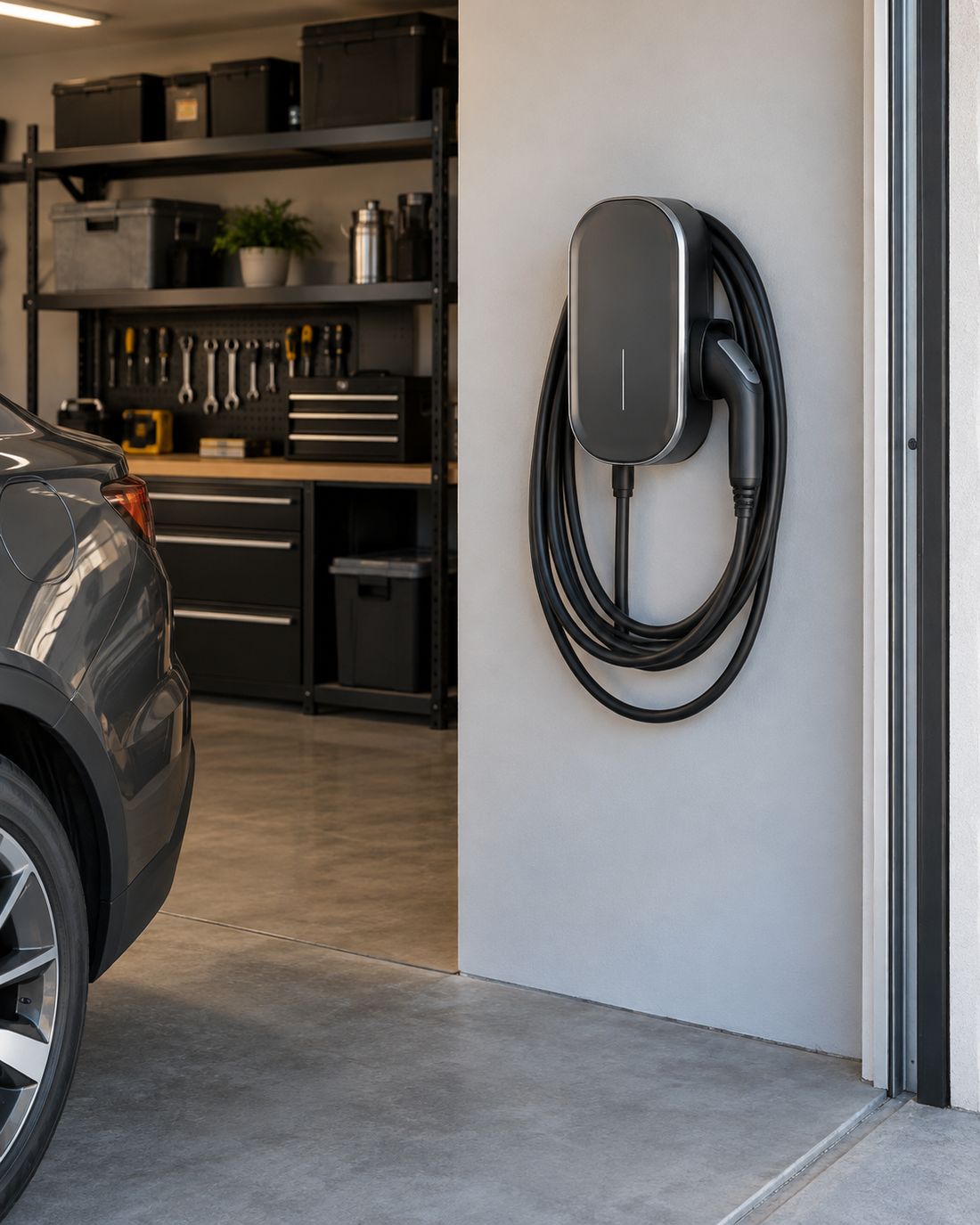
Reasons people upgrade
- Unsupported chargers: early units whose apps or servers have been switched off
- Smart tariff compatibility: some tariffs only work with certain chargers. Check the tariff's current list before you choose.
- Faster charging: going from a 3.6kW (16A) unit to 7.4kW (32A), where the circuit and supply allow
- Tethered convenience: no more digging the cable out of the boot
- Solar panels added: a solar-aware charger such as a zappi uses your surplus
- A second EV: replacing one unit with a pair that share the load
Reusing your existing circuit
A like-for-like swap is usually quicker and cheaper than a new install. The cable and protection are often fine as they are. We test the circuit before reuse. If you're moving up to 32A, we check the cable size, the protective device and your supply, so the upgrade is safe as well as faster.
Upgrading from 3.6kW to 7kW
A 3.6kW charger adds roughly 12 to 15 miles an hour; a 7kW charger roughly 25 to 30. For most drivers charging overnight, 7kW means a full battery inside the cheap-rate window. The upgrade needs a circuit rated for 32A and enough headroom on your main fuse, which we check on survey.
Common questions
Can I keep my existing cable?
Often, yes. If it's the right size for the new charger and passes testing, we reuse it, which keeps the cost down.
Do I need a new charger to use a smart EV tariff?
Only if your current charger isn't on the tariff's approved list. Some tariffs control charging through the car instead. We'll check yours before recommending anything.